
Roof Restoration Insights Why Skylights Leak on Metal Roofs
Field notes from Ramtech Roofing · November 9, 2026
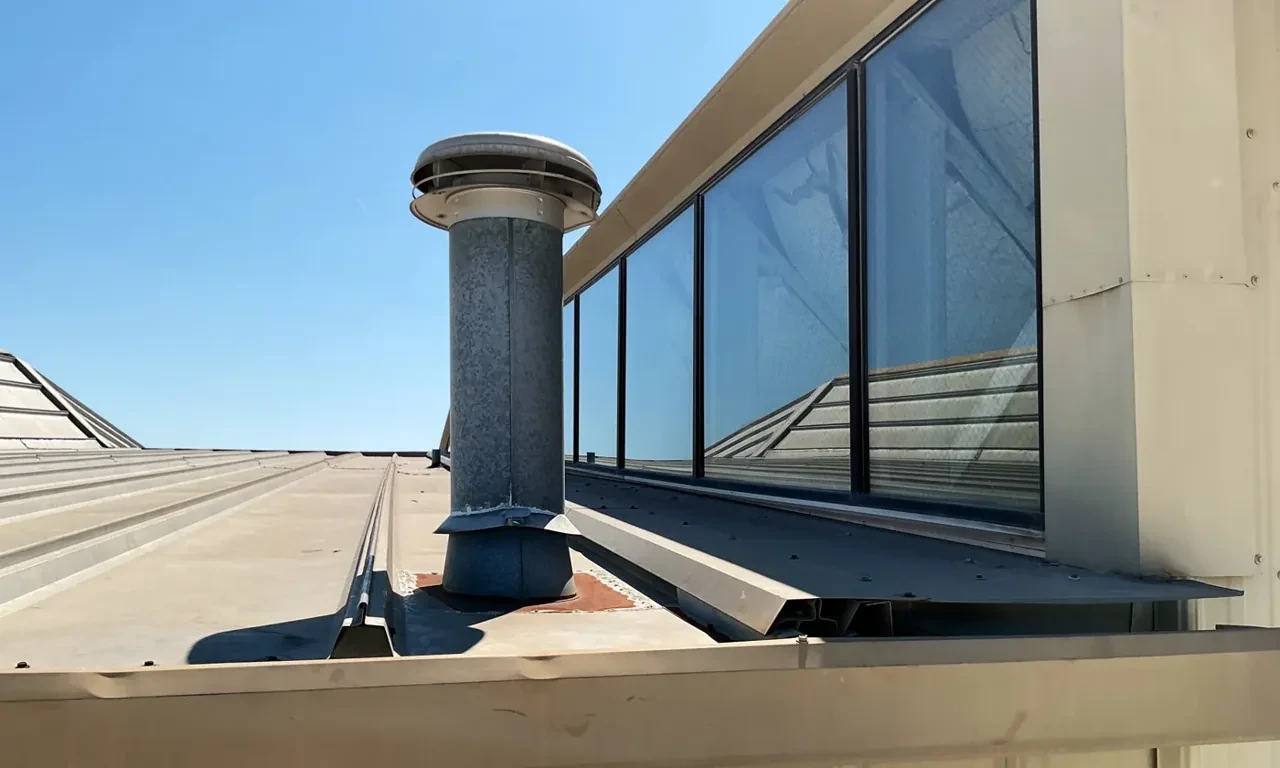
A row of skylights brings daylight into a metal building. It is also one of the busiest places on the roof for leaks.
The photo above is from a building with long runs of skylight glazing set into a standing seam metal roof, and leaks along those runs. Our inspection found open flashing joints, failed sealant, rust and backed-out fasteners at the skylights. None of it looked dramatic alone. Together, it let water in.
Why skylights leak more than the roof around them
A metal roof panel is a simple piece of steel. A skylight is not: glazing, a frame, a curb that lifts it above the roof, and sheet metal flashing that ties it all back into the panels. Every one of those parts meets another part, and every place they meet is a joint that has to stay sealed.
- Different materials move differently. Glazing, frames and steel panels expand and contract at different rates as the Texas sun heats them and the evening cools them off. The sealant between them gets stretched and squeezed every day.
- Water gets stopped and turned. On the uphill side of a skylight, water running down the panels hits the curb and has to find its way around it. That is where debris collects and where water sits the longest.
- Long runs mean more laps. A long skylight is built from pieces. Every lap in the flashing and every splice in the frame is one more place a leak can start.
- Screws hold it all together. Fasteners through the flashing and curb loosen as the metal moves. A screw that backs out leaves an open hole.
- Penetrations crowd in. Vents and pipes often sit close to skylights, like the vent in the first photo, putting even more joints in a small area.
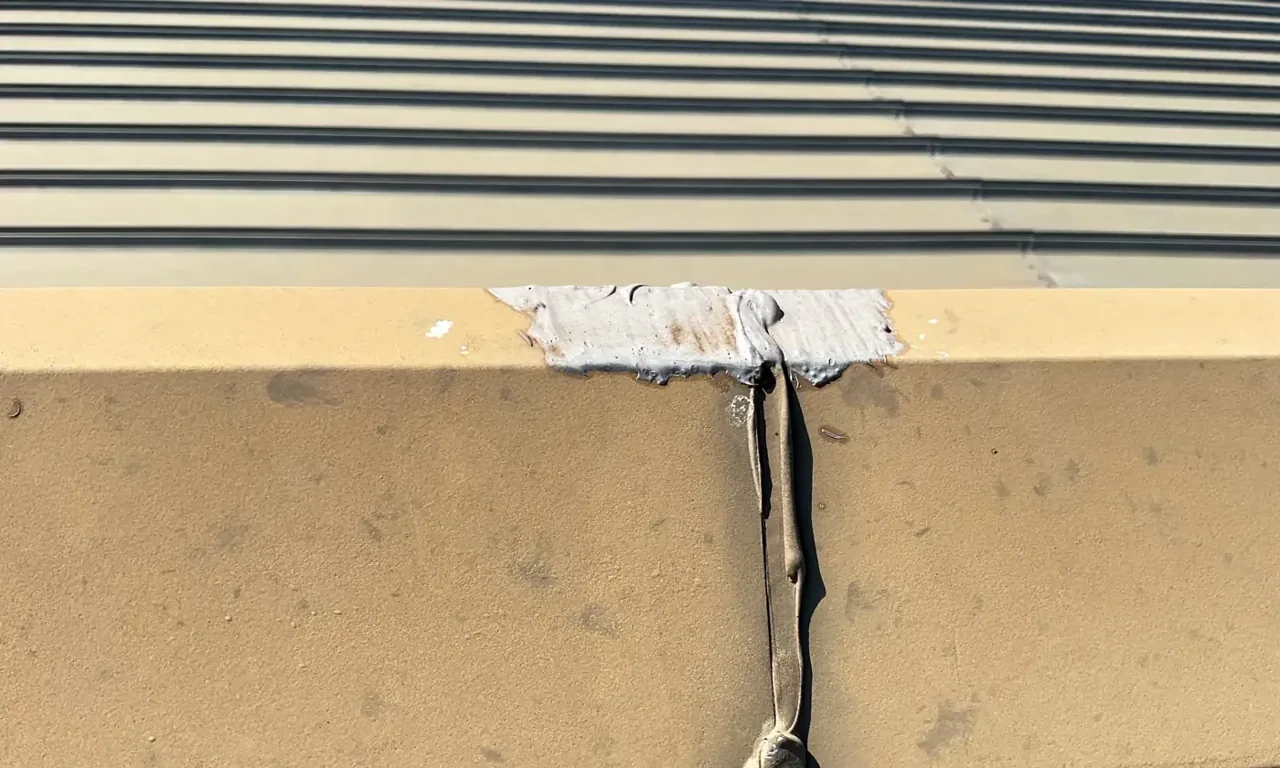
Why more sealant usually isn't the answer
When a skylight leaks, the quick fix is a tube of sealant. Sometimes that buys a season. New sealant doesn't bond well to old, dirty or loose sealant, so the new bead tends to come off with the old one. It can also hide the real problem, like a flashing lap that opened because its screws backed out, or metal rusting underneath. And when a skylight run has dozens of joints, sealing the one that looks worst is a guess. If the guess is wrong, the leak comes back after the next storm.
How we find and repair skylight leaks
We start with the whole skylight, not just the spot above the wet floor: glazing and frame, curb, every flashing lap, the fasteners, and any vents or pipes nearby. Each detail gets photographed and written up with the condition observed and the recommended repair, so the owner can see what we saw and what we propose before work begins.
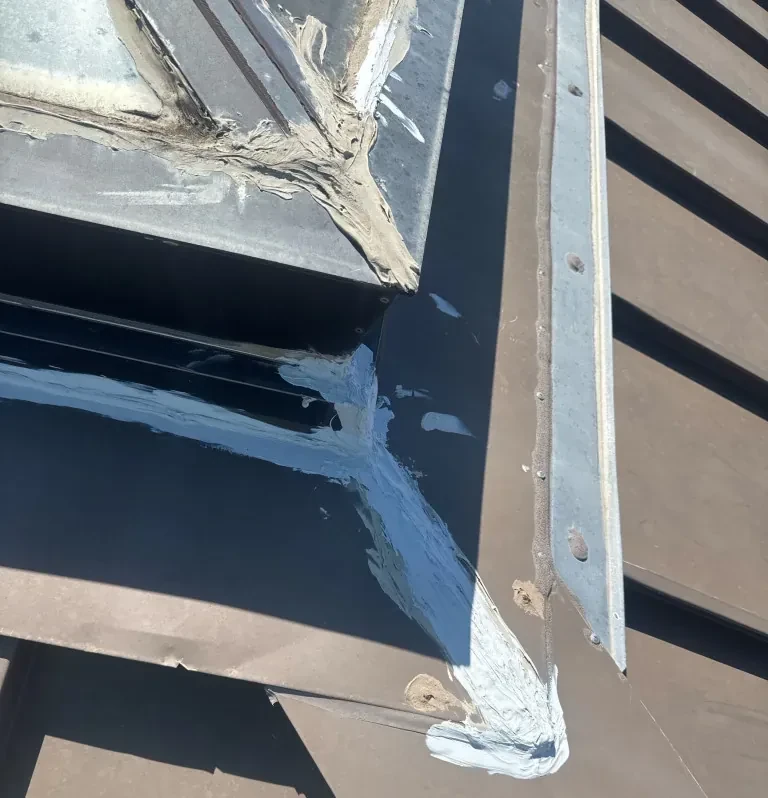
The repair is mostly preparation. Failed sealant and loose material come off. Rust is dealt with so new materials have sound metal to bond to. Loose and backed-out screws are replaced or reinforced. Open flashing laps are closed and sealed as joints that move, so the repair can flex with the metal instead of cracking. Curbs, frames and nearby penetrations get the same attention.
If the roof is headed for a fluid-applied restoration, this detail work comes first, so the restoration ties into each skylight instead of stopping short of the hardest part of the roof.
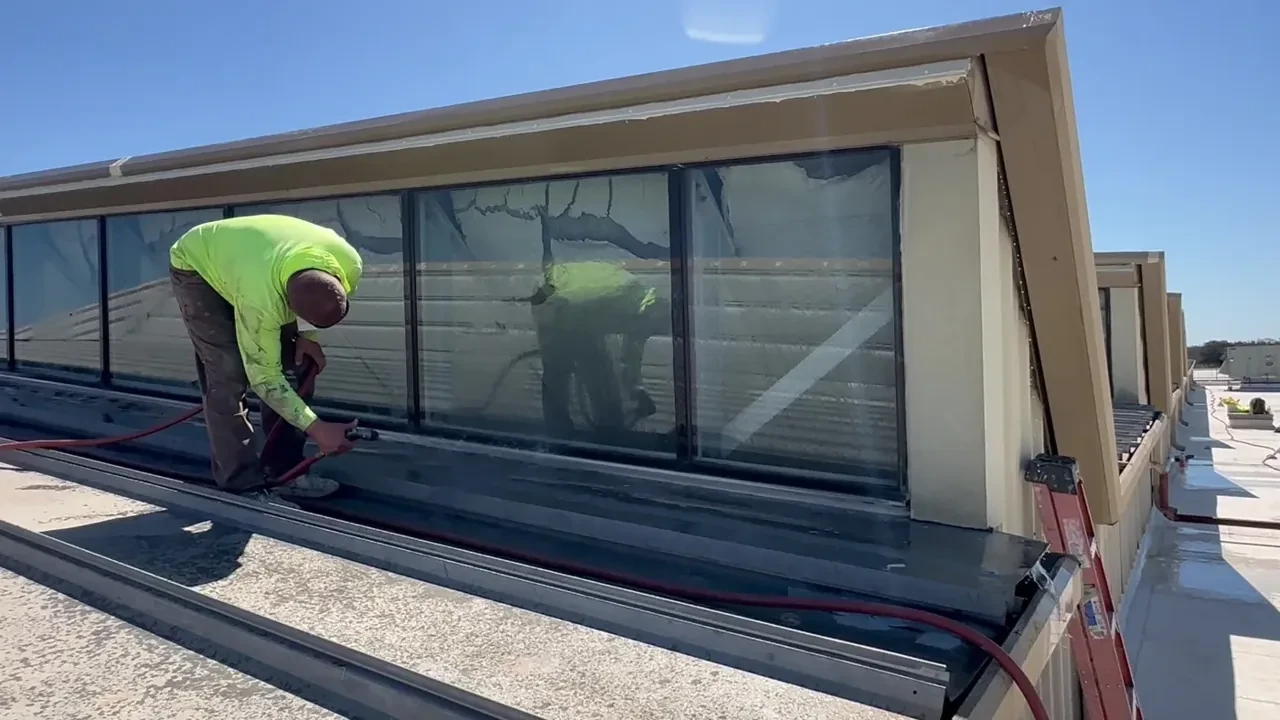
Then we check the work. Where it is appropriate for the roof and the site, we use controlled water testing on the repaired areas. Wetting one area at a time shows whether that detail is holding before the next rain does the testing. A local test checks only the area tested, and we tell the owner what was tested.
A word on safety
Skylights are also one of the most dangerous things on a roof. Older panels may not hold a person's weight, and a dusty panel can look like solid roof. Federal workplace safety rules treat a skylight like a hole: workers near one must be protected by a guardrail, a cover or a personal fall arrest system. Falls through skylights still injure and kill roofers.
For owners, the takeaway is simple. Don't send maintenance staff around skylights without fall protection, never step on one, and ask any roofer you hire how they will protect their crew. We plan for skylights before anyone goes up.
What building owners can check
You can catch a lot of skylight trouble from the floor. Look for:
- Drips, puddles or rust spots on the floor or equipment under skylights after a rain.
- Water marks or staining on the skylight frame or the ceiling around it.
- Daylight showing around the edge of a skylight frame where it shouldn't.
- From a safe spot on the ground, layers of sealant, rust streaks, or flashing that looks loose or open along the skylights.
If a skylight keeps leaking, note when: every rain, only with wind from one direction, or only in heavy storms. That history helps narrow down the joint.
Skylights are easier to keep tight when someone looks at them on a schedule. ArmorCare® spring and fall visits include checking flashings, penetrations and sealant joints, so small problems get written up before they become the next leak. Learn about ArmorCare®.
If your skylights keep leaking, request a roof consultation or call (682) 378-9304. You can also read how we handle commercial roof leak repair and roof restoration.