
Roof Restoration Insights Why Flat Roof Leaks So Often Start at the Drain
Field notes from Ramtech Roofing · November 2, 2026
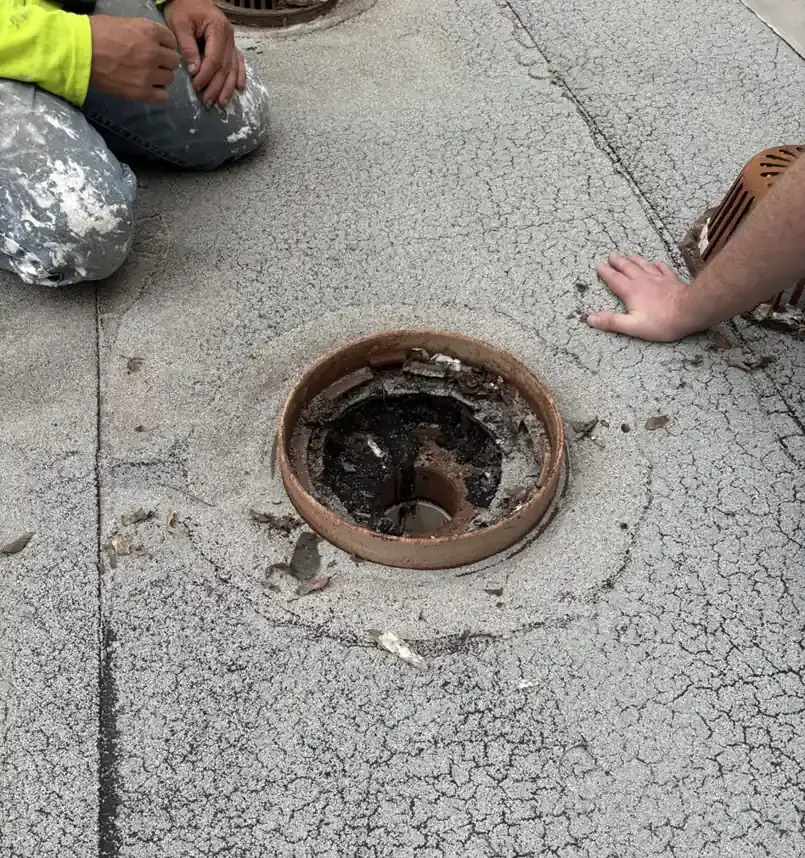
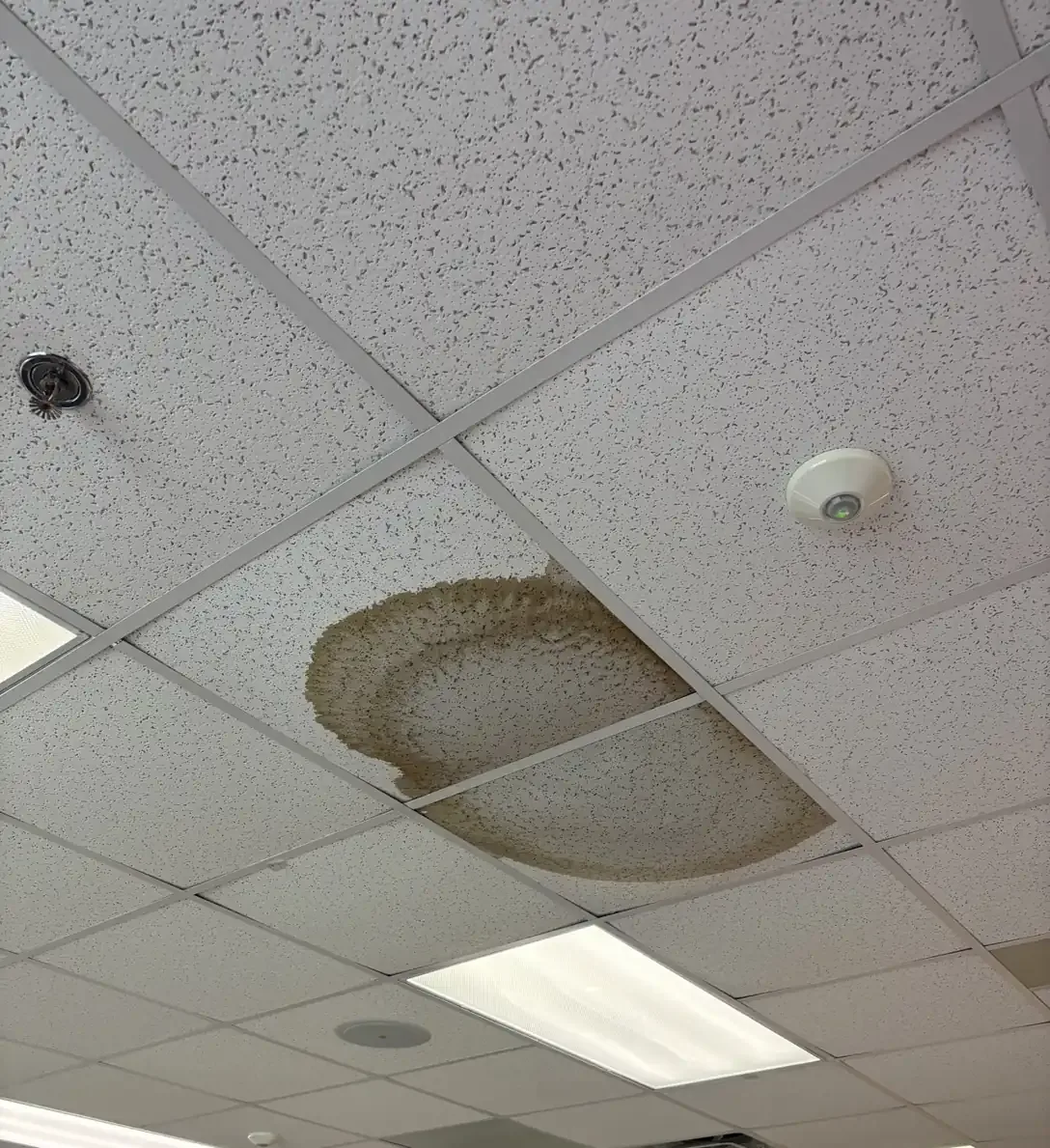
This one started inside a classroom. A school called us about stained ceiling tiles, the kind of brown rings that show up after a rain and never quite go away. We went up on the roof above that room and followed the water back to its source: a roof drain.
From a few steps away, the drain looked fine. Up close, the roof surface had cracked in a ring around the drain bowl. That crack was the doorway. What was behind it turned out to be much bigger than the crack.
Why drains are a weak point
On a low-slope roof, the drain is the one spot where all the water on that section is supposed to end up. Every rain, the roof sends water there on purpose. That makes the drain the busiest place on the roof, and the place where a small defect gets tested the hardest.
A few things work against it:
- It's a joint between different materials. The roof membrane has to be sealed to a metal drain body, usually with a clamping ring. Metal and roofing materials expand and contract at different rates, so that joint is always working.
- Water sits there. Drains are often at the lowest point, and a partially clogged strainer leaves water standing around the bowl. Standing water is hard on any roof surface, and it keeps pressure on every flaw.
- Everything else ends up there too. Leaves, grit, roofing granules and trash all wash toward the drain. In the fall, when trees drop their leaves, a strainer can clog in a single storm.
- People step there. Maintenance staff clear drains by hand, kneel around them and set tools down next to them. Over the years, that traffic cracks an aging surface.
What we found under the surface
This roof was a built-up roof, with layers of felt and asphalt over insulation. When we opened it up around the drain, the layers had separated and were holding water like a sponge. Below them, the insulation was saturated and falling apart.
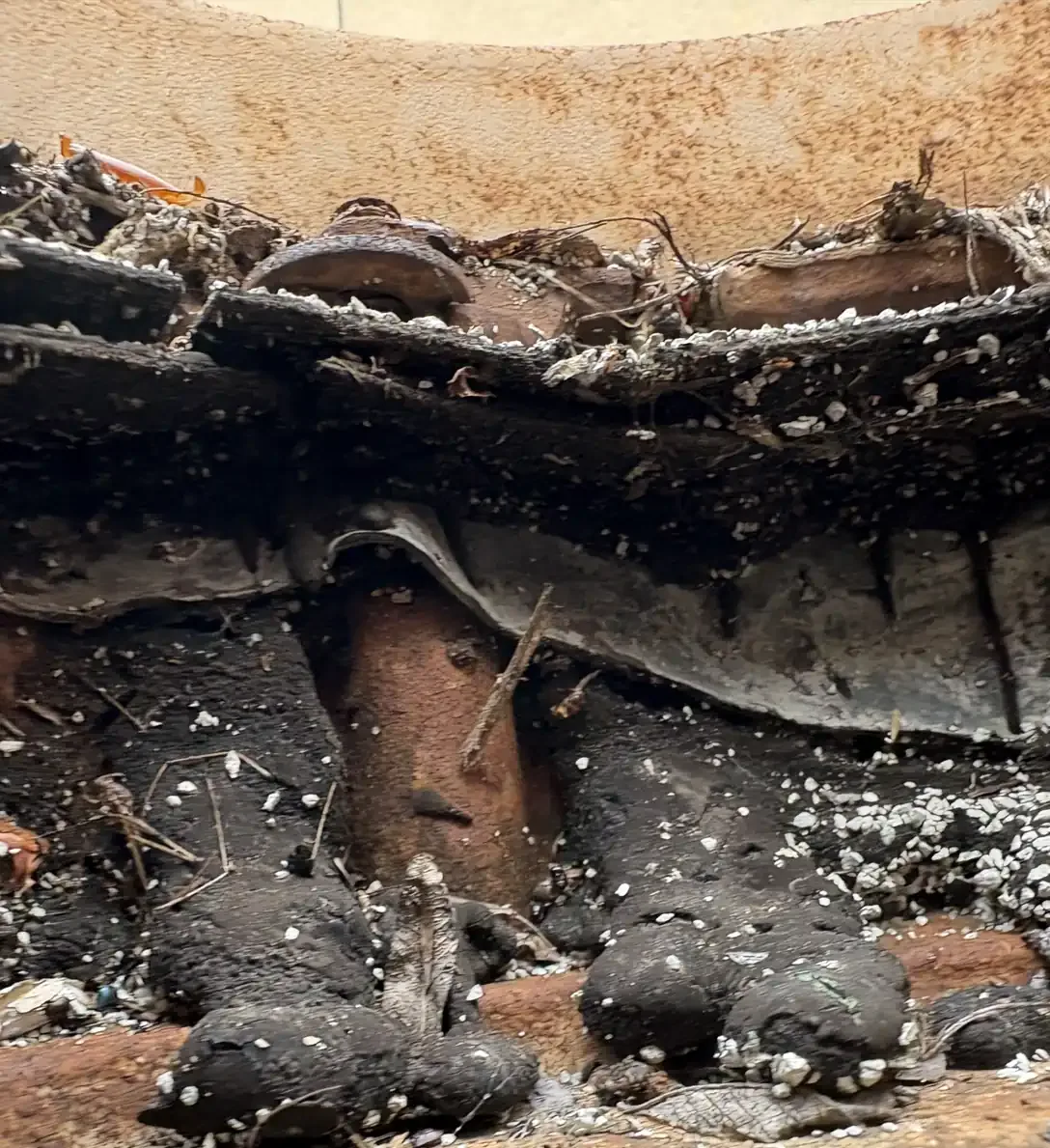
This is why a drain leak often looks small from inside the building. Water that gets past the surface doesn't have to drip straight down. It can travel through wet insulation and between layers, spreading out under the roof until it finds a path to the ceiling. By the time the tile stains, the wet area on the roof can be well beyond the drain itself.
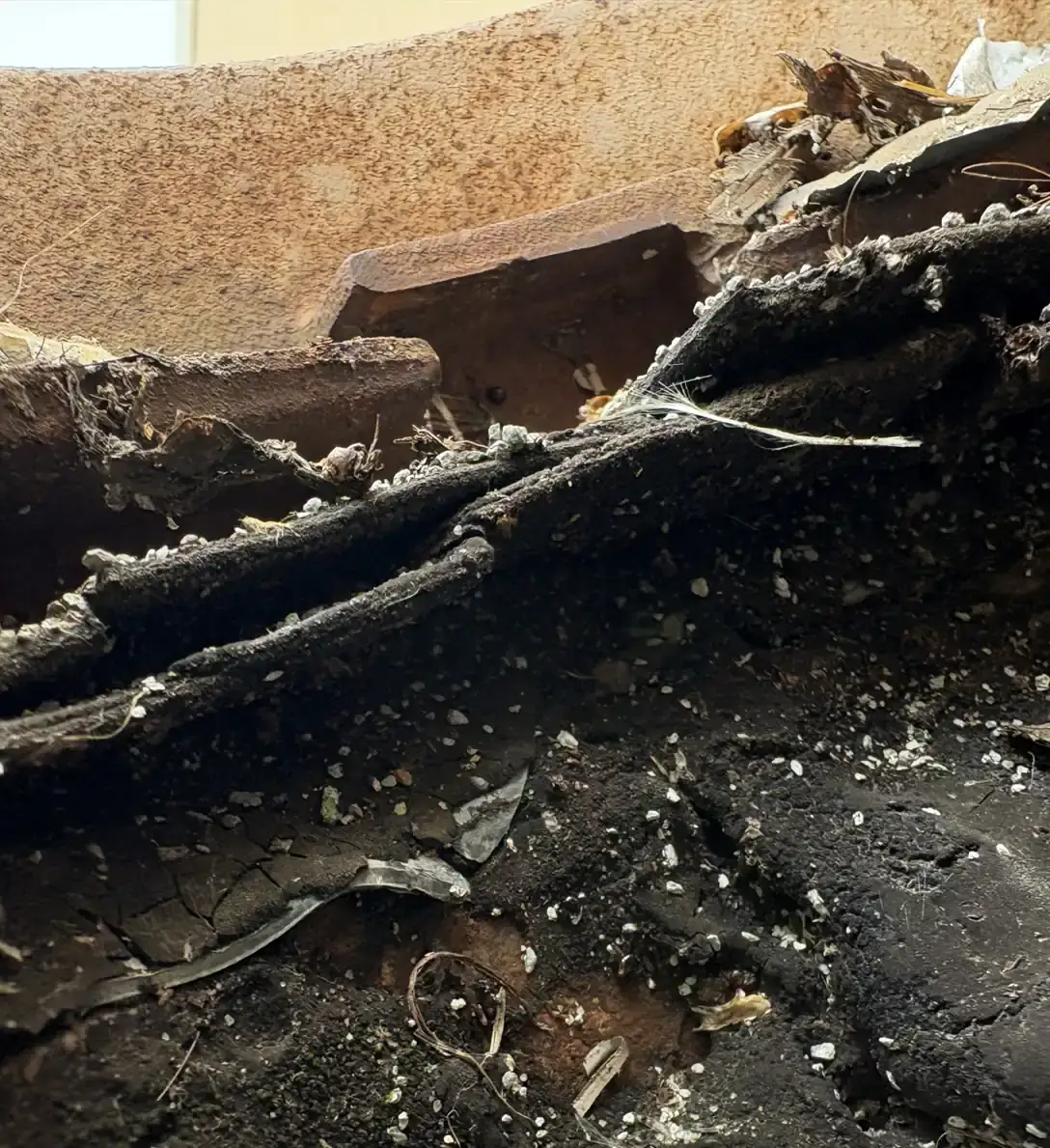
It's also why smearing sealant over the crack wouldn't have fixed anything. The water was already inside the roof. Sealing over the top would have trapped it there.
How the repair works
We opened the area around the drain, removed the wet and failed material, and rebuilt the drain so the roof is sealed to it again with sound material all the way down. Wet insulation doesn't dry out in place, so it has to come out and be replaced. Then the roof around the drain is rebuilt to tie back into the surrounding roof.
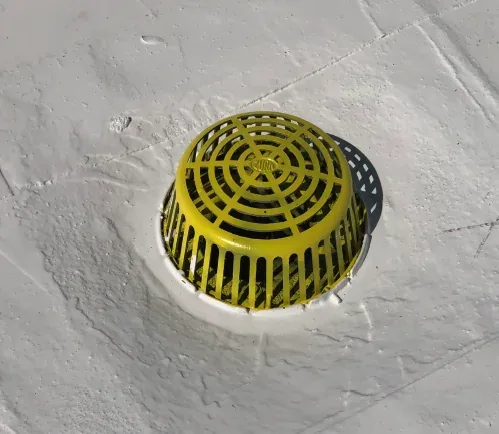
A drain repair like this is also a good moment to think about the rest of the roof. If the roof is otherwise sound, a fluid-applied restoration can renew the surface across the whole roof, but only after wet areas are found and removed. That's why we check for moisture before recommending restoration. Putting a new surface over wet insulation just seals the problem in.
What building owners can check
You don't have to be a roofer to catch drain trouble early. A few times a year, and after big storms, have someone look for:
- Leaves, debris or a missing strainer at each drain.
- Water still standing around a drain a couple of days after the rain stops.
- Cracks, splits or blisters in the roof surface around the drain bowl.
- Ceiling stains on the floor below, especially ones that line up with a drain above.
Fall is a good time to check, before winter rains, since leaves drop just when drains need to be clear. If a ceiling stain keeps coming back, don't just replace the tile. Find the drain above it.
Those checks are also part of how we keep roofs on a schedule. On an ArmorCare® plan, we visit in spring and fall, clear drains and gutters as part of the visit, and document what needs attention before it turns into a leak. Learn about ArmorCare®.
If you're seeing leaks near a roof drain, request a roof consultation or call (682) 378-9304. You can also read how we handle commercial roof leak repair and roof restoration.