
Roof Restoration Insights Why Caulk Keeps Failing on Metal Roof Screws and Seams
Field notes from Ramtech Roofing · October 26, 2026
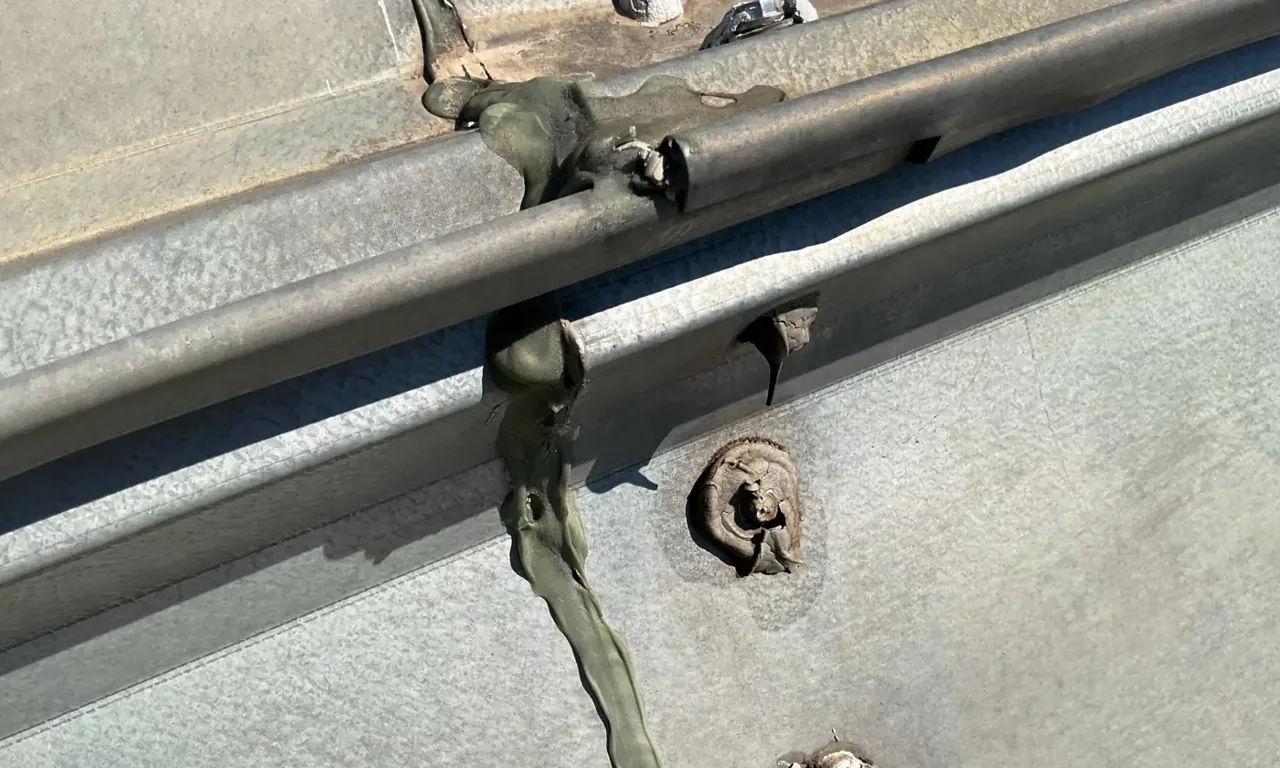
Look closely at that screw. It isn't one repair. It's several, stacked on top of each other.
We see this on aged metal roofs all over Texas. A screw starts to leak, someone goes up with a tube of caulk and covers it, and the leak stops for a while. Then it comes back, and the next person adds another layer. Years later there is a mound of hardened sealant sitting on top of a screw that has backed out of the panel, with a trail of caulk running down the seam beside it. The roof has been patched many times, and it still leaks.
That pattern says a lot about what is actually wrong, and why another tube of caulk won't fix it.
Metal roofs move every day
A metal roof grows and shrinks with temperature. On a Texas summer afternoon the panels get hot and expand; at night they cool and contract. That happens every day, all year, for the life of the roof.
On a through-fastened roof, the panels are screwed straight through to the structure below. Every cycle of movement works those screws a little. Over time, the rubber washers under the screw heads dry out and crack in the sun, the holes in the panel can wear larger, and screws can loosen and back out. Once the washer stops sealing, water follows the screw shank into the building.
Seams and laps face the same problem. Where one panel overlaps another, the sealant between them has to stretch and compress as the panels move. When that sealant gives out, the lap opens up and water gets driven in by wind and rain.
Why a dab of caulk doesn't hold
A blob of sealant over a screw head or along a seam treats the symptom. It doesn't address any of the causes:
- The screw is still loose. Caulk over a backed-out screw just covers it. The screw keeps moving, and the caulk cracks or lets go along its edges.
- The joint still moves. A seam opens and closes with temperature. A thin bead of sealant without reinforcement is asked to stretch across that movement every day until it tears.
- The surface wasn't ready. Sealant needs a clean, sound surface to bond to. Laid over dirt, rust, chalky paint or older caulk, it can look sealed while barely being attached.
- It can hide what's underneath. Layers of old sealant can hold water against the metal and hide rust, so the problem grows out of sight.
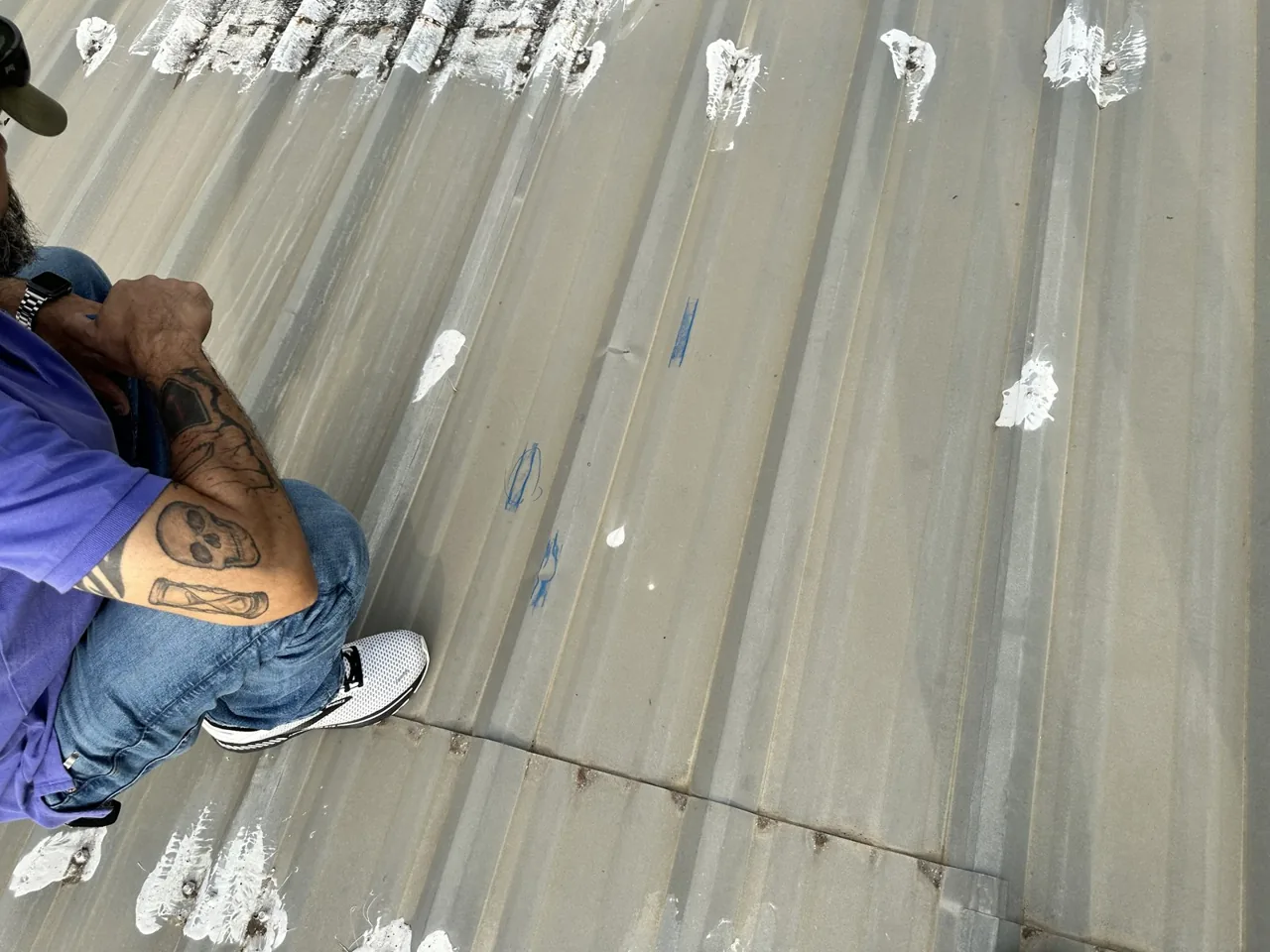
The polka-dot look in the second photo is a common sign. When dozens of screw heads across a roof have been dabbed one at a time, it usually means leaks have been chased spot by spot for years without anyone stepping back to look at the roof as a whole.
What a lasting repair looks like
The fix starts with taking the roof's movement seriously. On the metal roofs we restore, the work is mostly preparation, and most of it happens at the screws, seams and laps before any fluid-applied restoration system goes on.
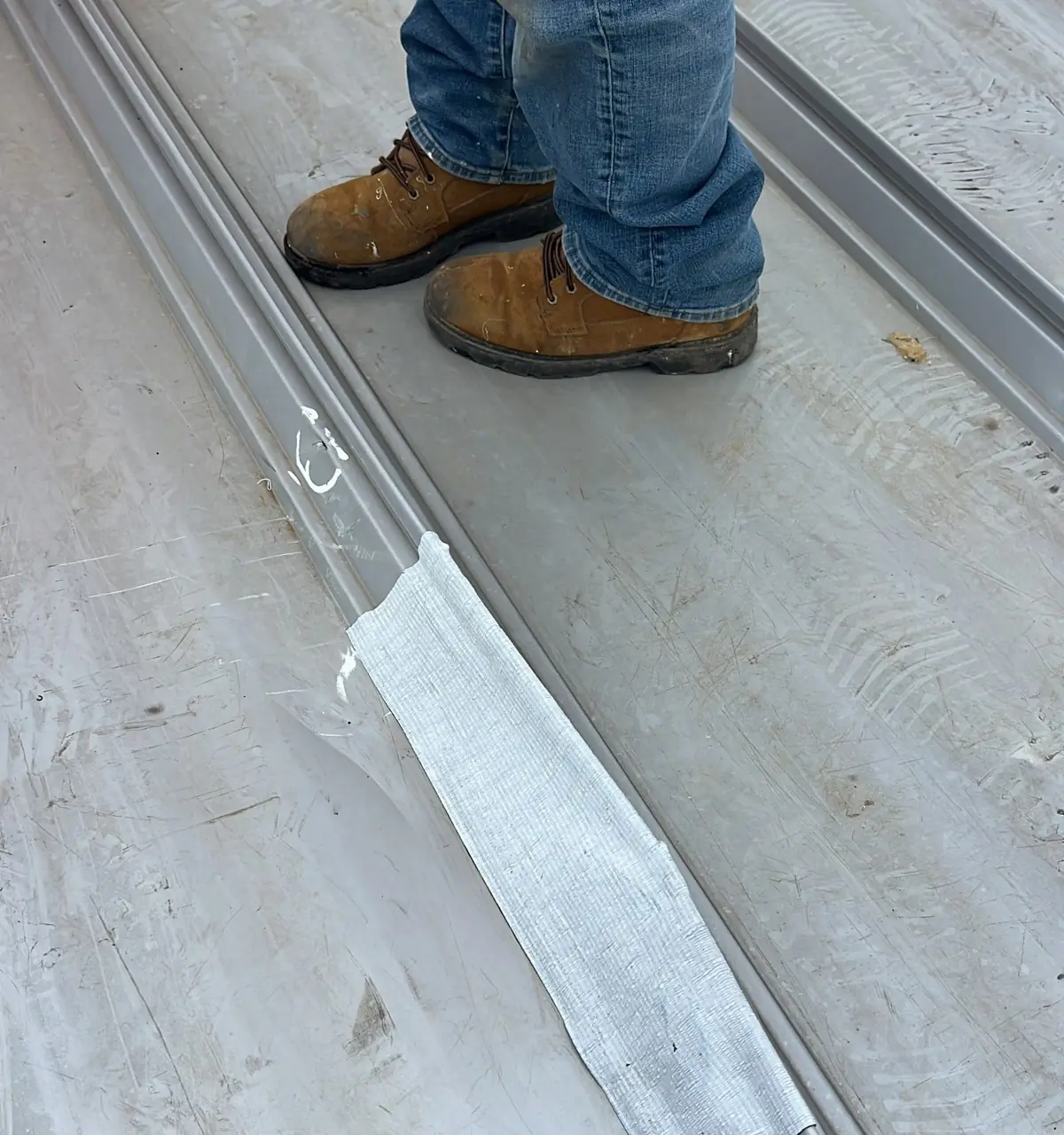
Loose, backed-out and stripped screws get replaced or reinforced so the panels are held tight again. Failed sealant, loose material and rust are dealt with so new materials have something sound to bond to. Seams and laps get sealed as joints that move: reinforcing fabric is set into the repair material along the seam, as in the photo below, so the repair can flex with the panels instead of cracking across the joint.
Penetrations, curbs and flashings get the same attention, since those are the other places water usually finds its way in. Then the restoration system goes on over the whole roof, following the manufacturer's specification, so the roof is protected as one continuous surface rather than a patchwork of spot repairs. Where we can, we water-test the repaired areas to confirm they hold.
Not every metal roof is a restoration candidate. If panels are rusted through or the structure under them is compromised, that changes the conversation. That's why we evaluate the roof first and put the scope in writing before any work starts.
What building owners can check
You don't need to climb on the roof to notice the warning signs. Look for:
- Leaks or water stains that keep coming back in the same areas after a repair.
- Rust streaks running down from screws or laps.
- Screws that sit higher than the ones around them, or caulk mounded over screw heads.
- Lines of sealant smeared along seams, especially in several layers or colors.
If you see layers of past repairs, that history is useful. It tells us where the roof has been leaking, and it usually means it's time to look at the whole roof instead of patching one more spot.
If your metal roof keeps leaking at the same places, request a roof consultation or call (682) 378-9304. You can also read how we approach roof restoration and commercial roof leak repair.