
Roof Restoration Insights What a Blistering Roof Surface Tells You Before Restoration
Field notes from Ramtech Roofing · October 20, 2026
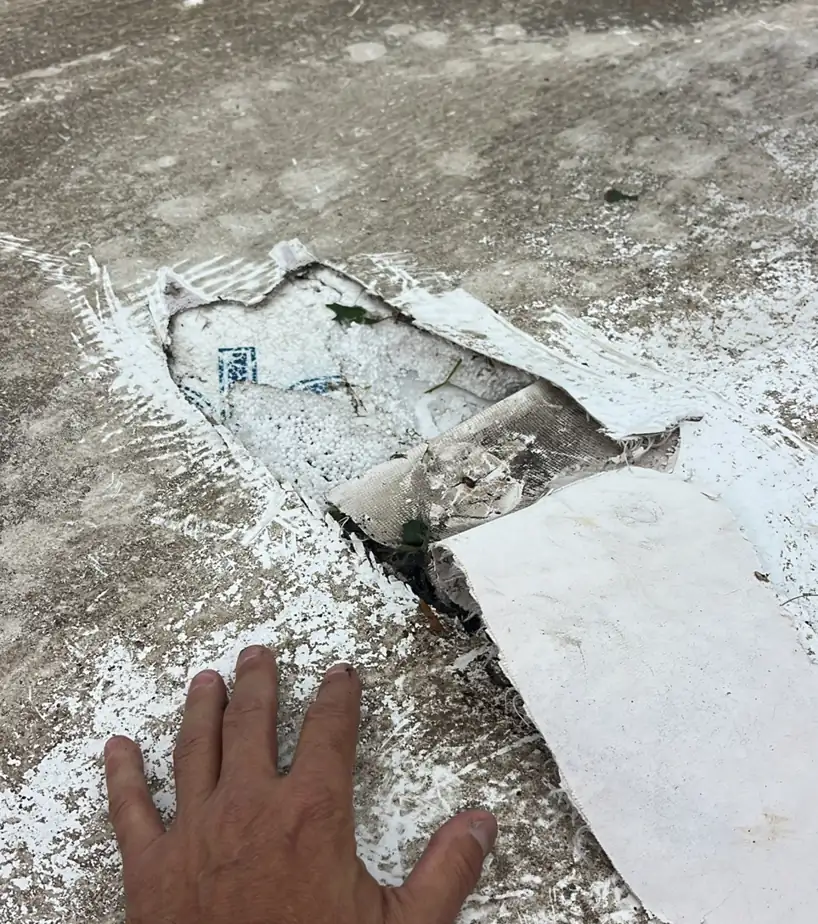
The building is a plant that makes PVC pipe. Some of the small beads used to make that pipe ended up inside its roof.
That piece of white material under the hand is a section of TPO roof membrane we cut open at that plant. A blower unit, a piece of rooftop equipment that moves air, had been flashed into the roof right at that spot. It pulled so much negative pressure under the roof, in the space between the membrane and the deck, that it drew the small beads used to make PVC pipe up into the roof system. They got trapped between the membrane and the deck and kept accumulating. The membrane rose into a giant blister that kept growing until it almost popped. That is when we got the call.
How air can lift a roof
A single-ply membrane like TPO is a thin sheet. It stays put because it is fastened or adhered to the layers below it and because the air pressure above and below it is roughly balanced. When that balance changes, the sheet can move.
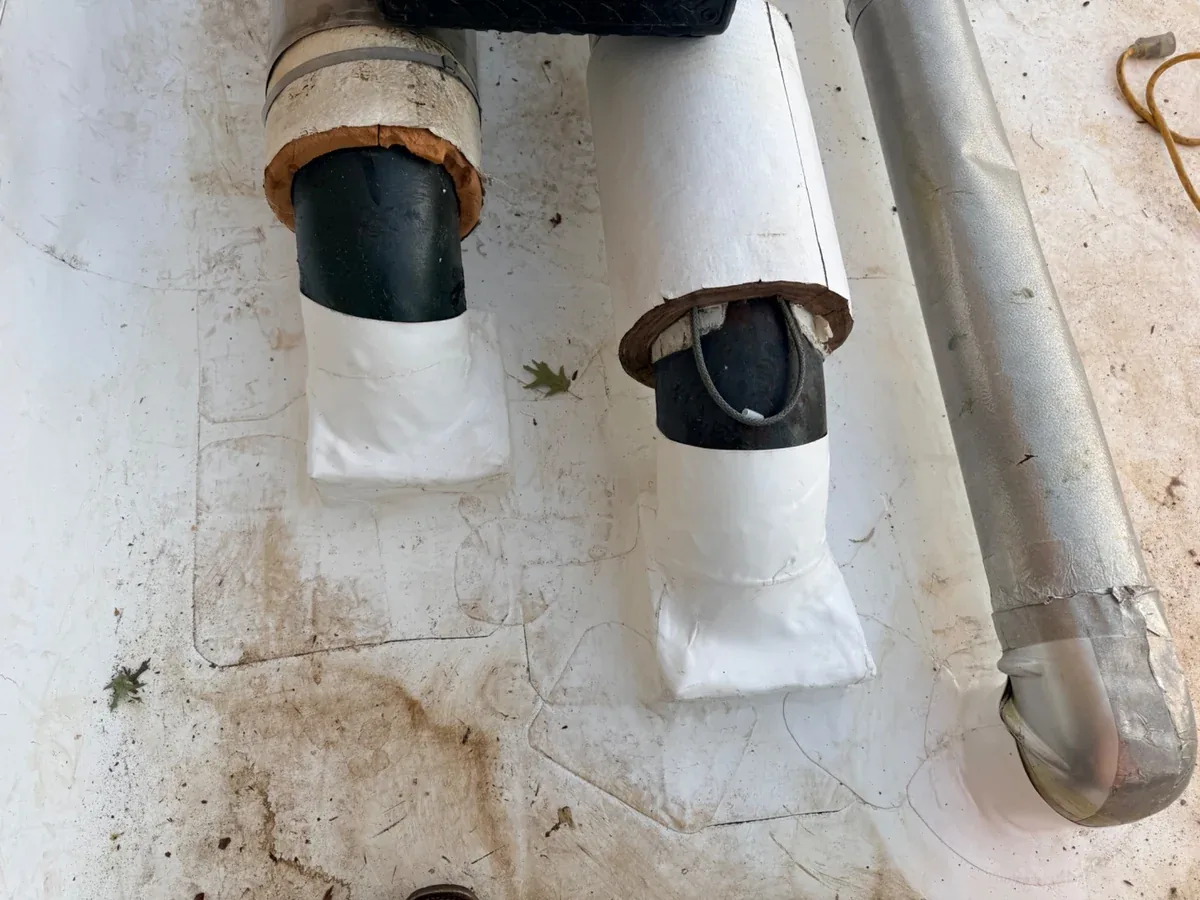
Rooftop equipment that moves air can change it. If there is an air path between the inside of the unit or curb and the space under the membrane, through a gap at the curb, an opening in the deck, or a flashing that was never fully sealed, the equipment can draw air out from under the roof or push air into it. Either way, the pressure under the membrane no longer matches the pressure on top.
A well-adhered membrane resists that. A membrane that is loose, partially adhered, or relying on a few fasteners in that area does not. Air collects under it, the sheet lifts, and every time the equipment runs, the blister can get bigger. Eventually the membrane stretches, seams and flashings get stressed, and the roof is one hailstorm or one foot away from a tear.
Signs to watch for
This kind of damage is easy to miss because the roof can look watertight right up until it is not. If you or your maintenance staff are on the roof, look for:
- A pillowing or ballooning membrane near rooftop units, fans, or curbs.
- A blister that seems to grow or tighten when the equipment is running and relax when it shuts off.
- Membrane that feels loose or moves underfoot around a penetration.
- Wrinkles, stressed seams, or pulled flashings at the base of a unit.
Don't puncture a blister to let the air out. That turns an air problem into a water problem. Call a roofer and, ideally, note whether the equipment was running when you saw it.
How we fixed it
A blister like this is not something you can press back down. The stretched, damaged membrane has to come out, which is why we have this piece to photograph, and the trapped beads have to be cleared from between the membrane and the deck. Once that is done, the real work begins: finding the air path that caused it. We look at how the unit and curb were flashed, whether the curb and deck around it are open to the space under the roof, and how well the surrounding membrane is attached.
The air path gets sealed first. If we skip that, the same equipment will lift the new material just like it lifted the old.
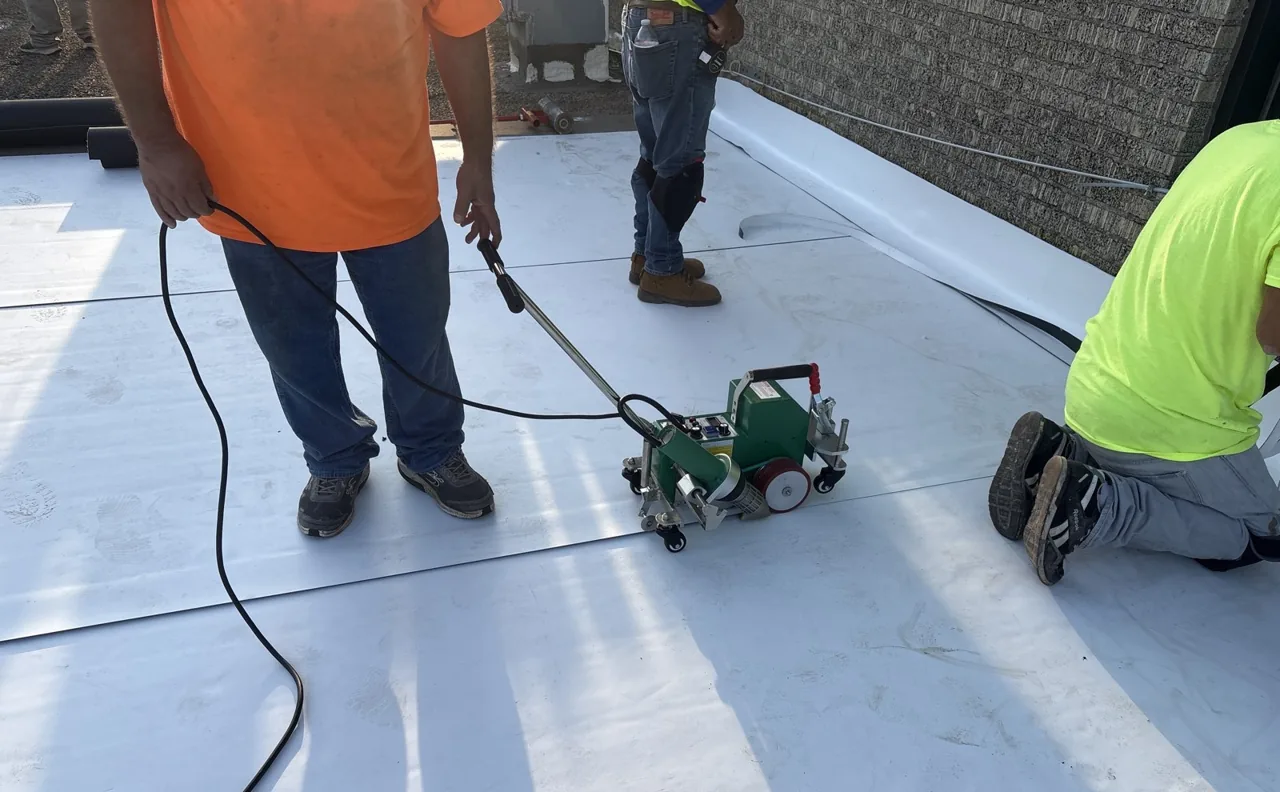
Then the roof gets repaired. On TPO, heat-welding new membrane into the existing sheet is often the right choice, because it gives a like-material repair that bonds to the roof around it. That follows how we approach every repair: we choose the method job by job, with a written scope, and use the one that gives the roof the longest repair window. Sometimes that is a heat-welded repair, and sometimes a fluid-applied repair is the better fit.
The takeaway for building owners
What a building makes or exhausts can end up inside its roof. At plants, check the roof around exhaust and blower units regularly, not just the units themselves. Dust, fibers, or product pulled under a membrane add up quietly until the roof shows it.
Rooftop equipment and the roof under it work as one system. When a unit is set, replaced, or re-flashed, the seal between the equipment, the curb, the deck, and the membrane matters as much as the roof itself. If you see a membrane ballooning near a unit, treat it as an air problem first and a roof problem second, and get it looked at before it tears.
If something on your roof looks like this, request a roof consultation or call (682) 378-9304. You can also read how we handle commercial roof leak repair and roof restoration.